A glance over Tony’s bench
College E-Flat Clarinet COA
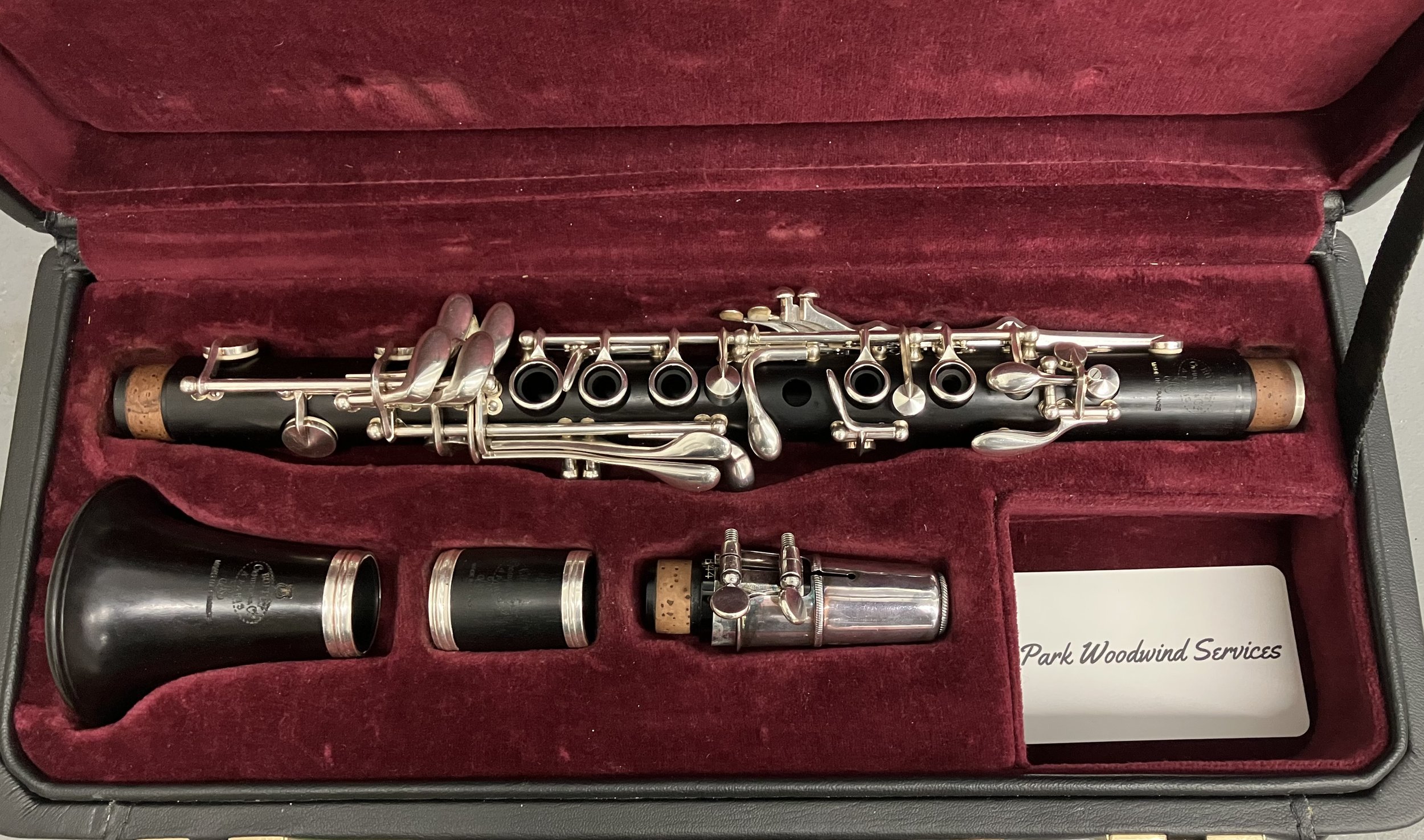
Some instruments don’t get played a lot and sit in storage for a long time. Over time, the wood can dry, distance between posts can shrink, and lead to binding keys. This instrument had many, many binding keys, and needed a lot of work to get them all functioning as they should. COA stands for clean, oil, and adjust. For this clarinet, all socket rings were re-fitted, keys cleaned and oiled, body cleaned and oiled, and bumpers and pads were replaced as necessary. Instruments are always play-tested to ensure smooth playing experience for the player.
Contrary to popular belief, an instrument does not stay in good shape if it just sits in the case unplayed with no ideal humidification!
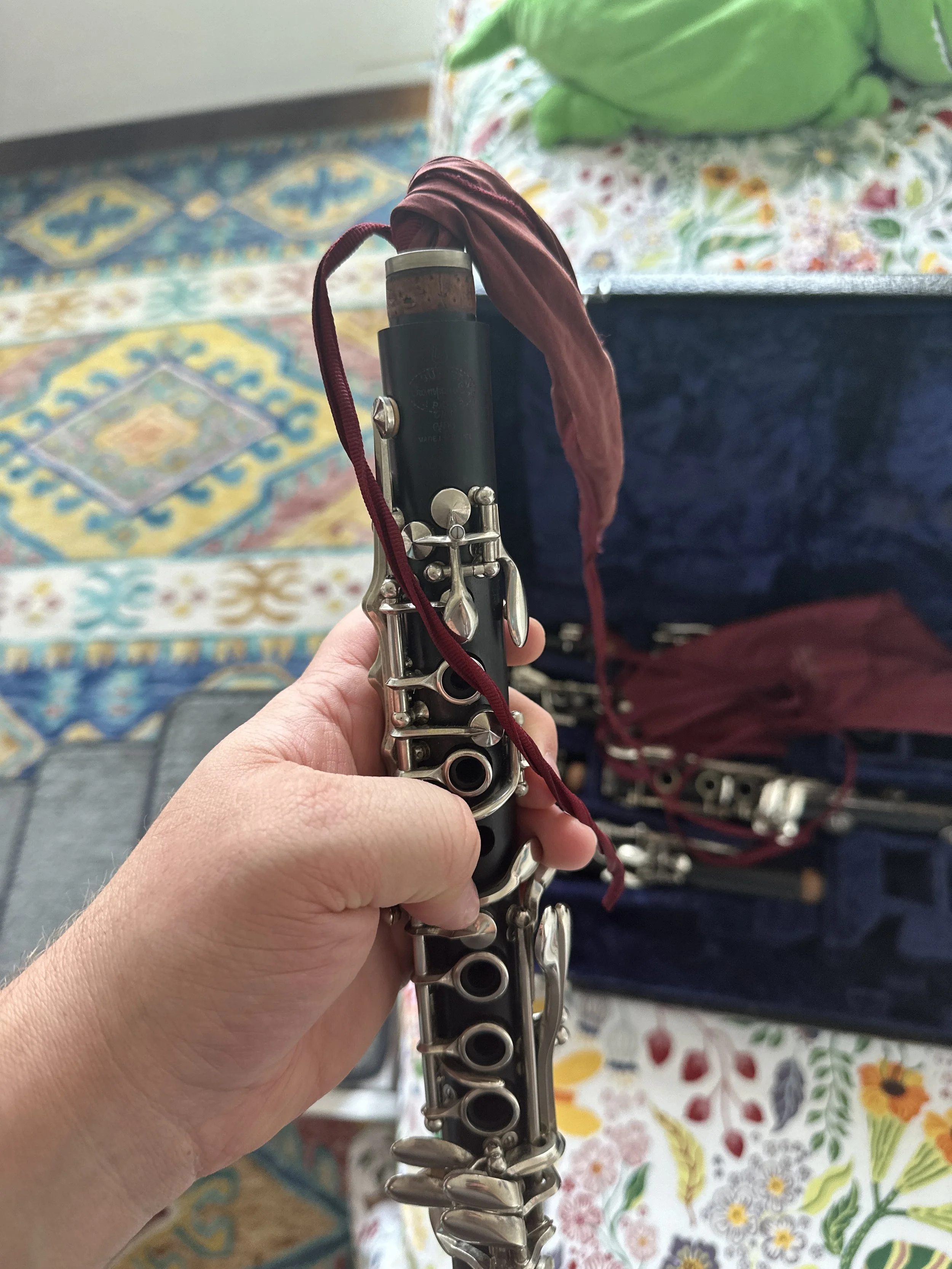
E-flat clarinet stuck swab removal
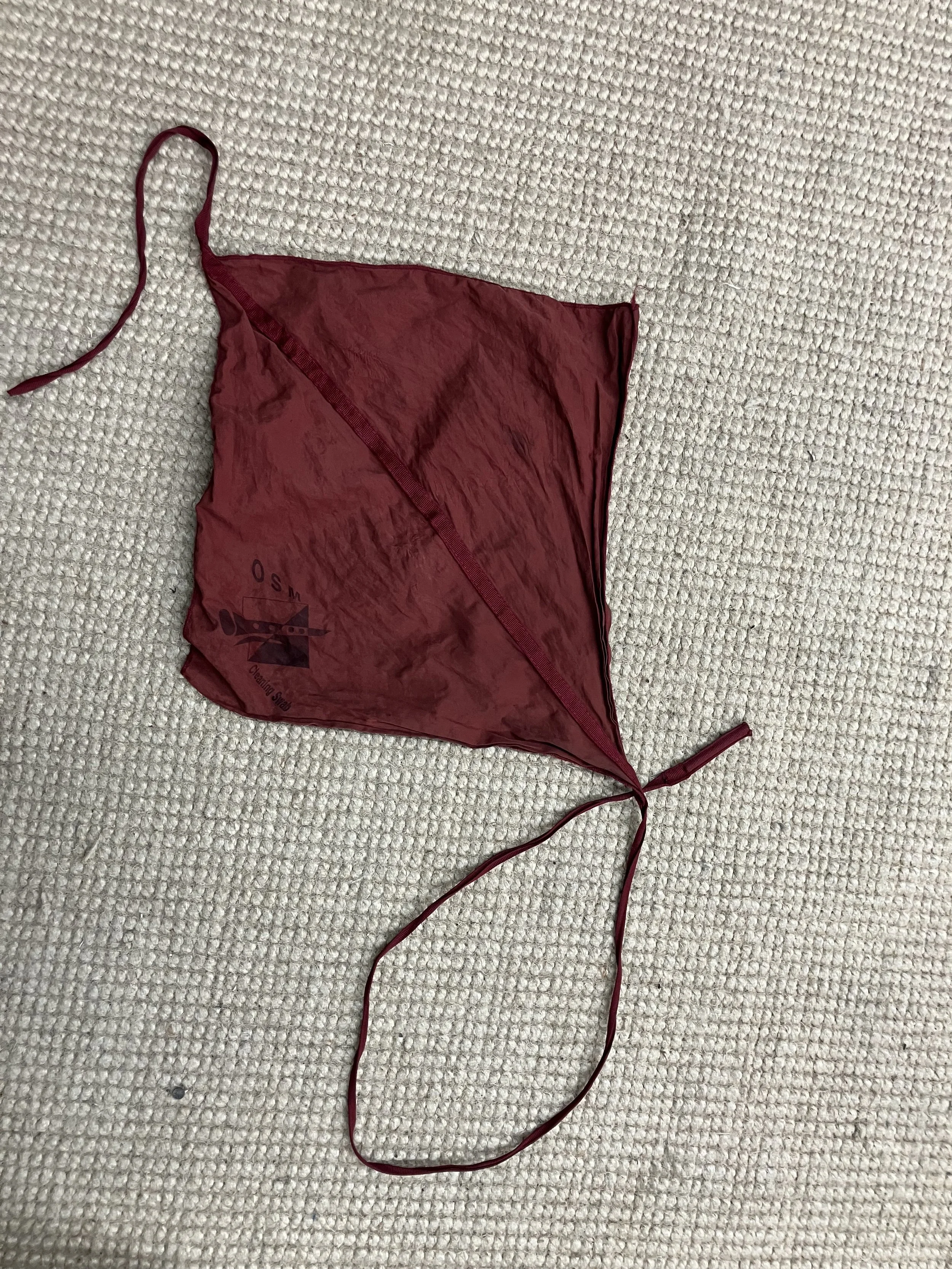
There comes a time in a clarinetist’s career where the swab gets stuck in the clarinet. If this happens, don’t try to pull, as you will make it worse. Try to stay calm, contact your favourite repair person, and bring in your instrument. For this clarinet, the swab was freed after pulling out the register tube. Serious damage can be done very quickly with stuck swabs, so please don’t try this at home!
Bass clarinet bent key correction
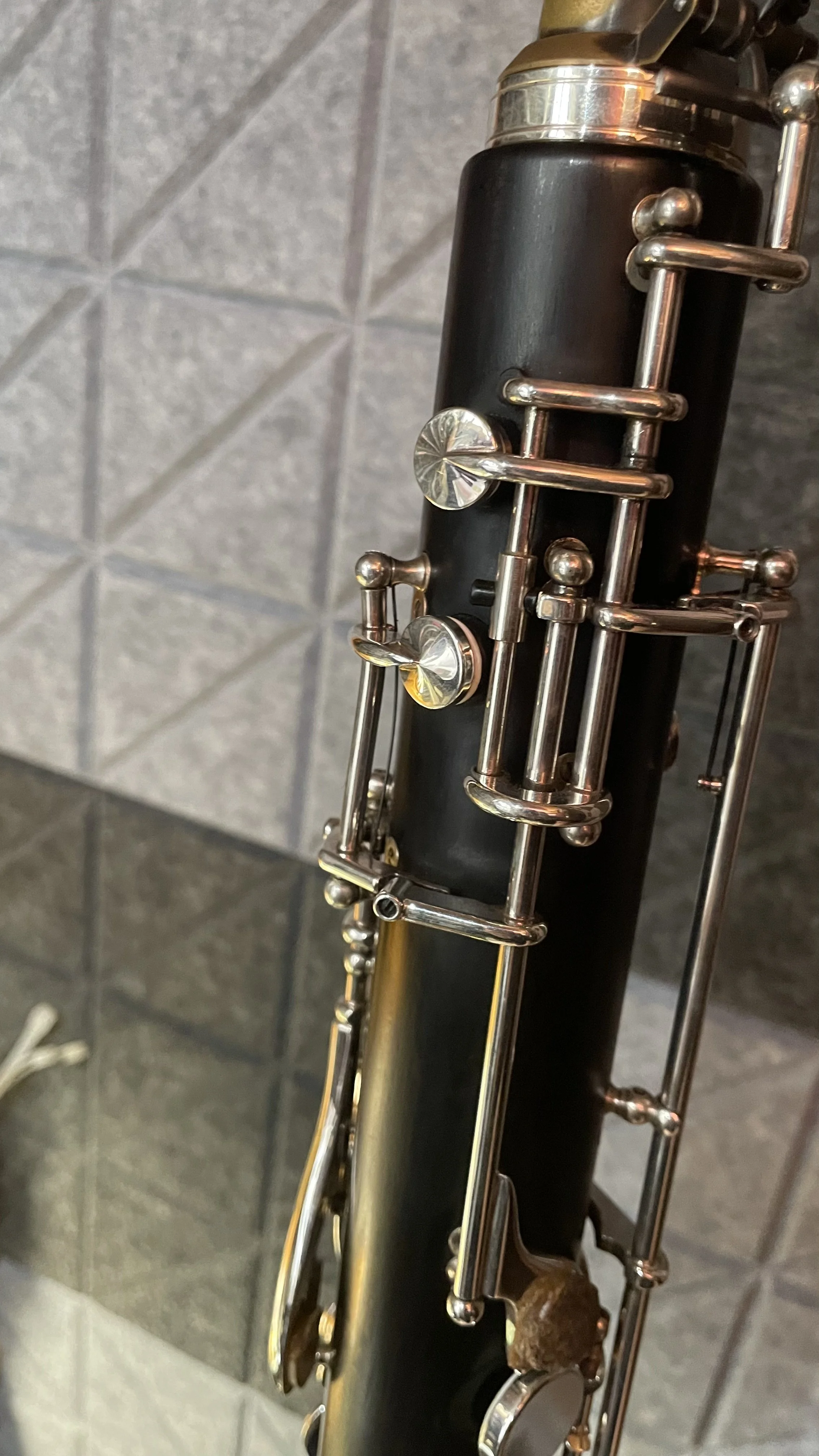
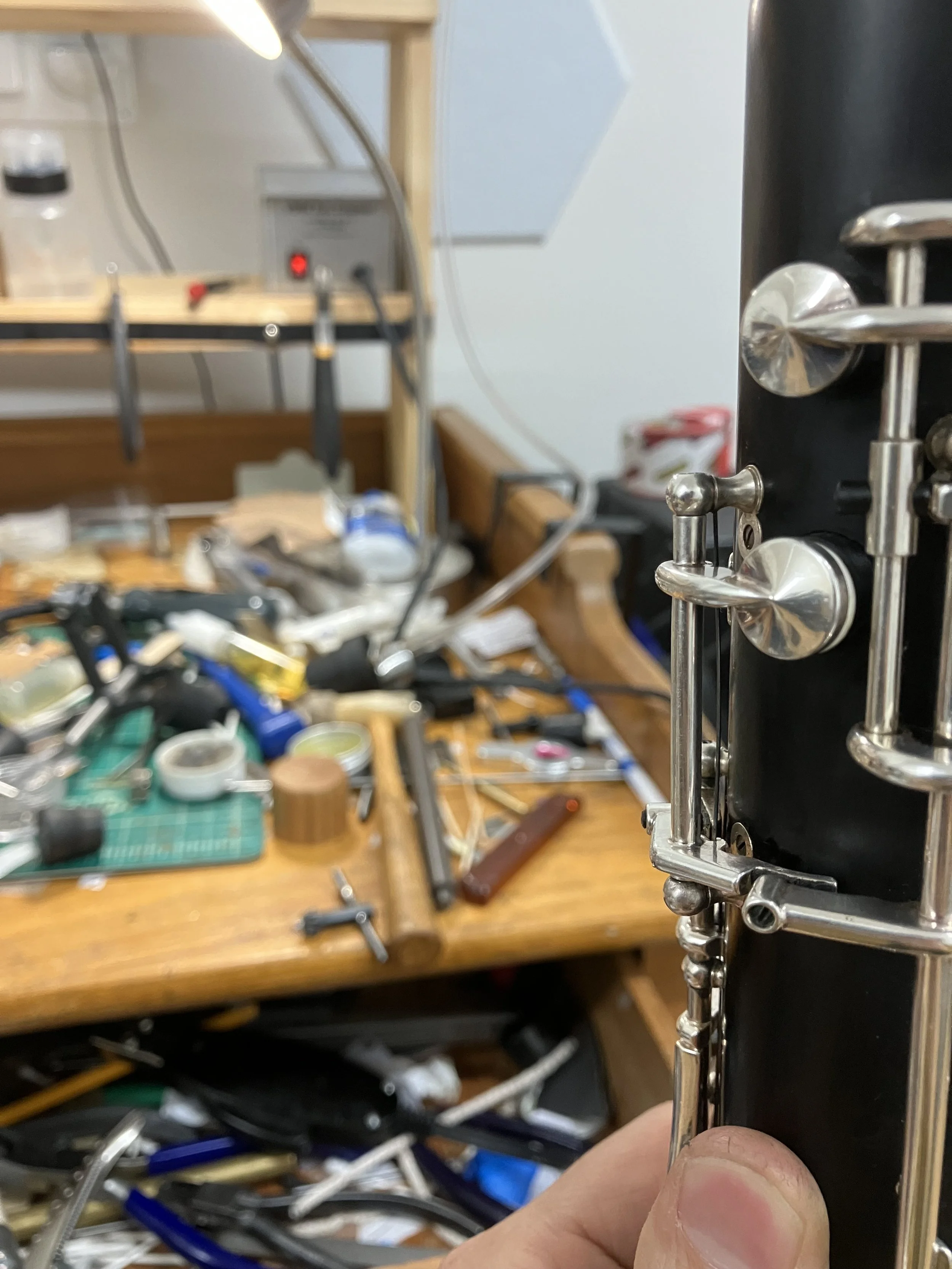
This bass clarinet was leaned against the wall without a stand. One thing led to another, it fell on the ground. The key that took most of the trauma was so bent that one of the pivot screws broke in half! It took a bit of time, but we were able to unbend the key, and make the key function smoothly once again!
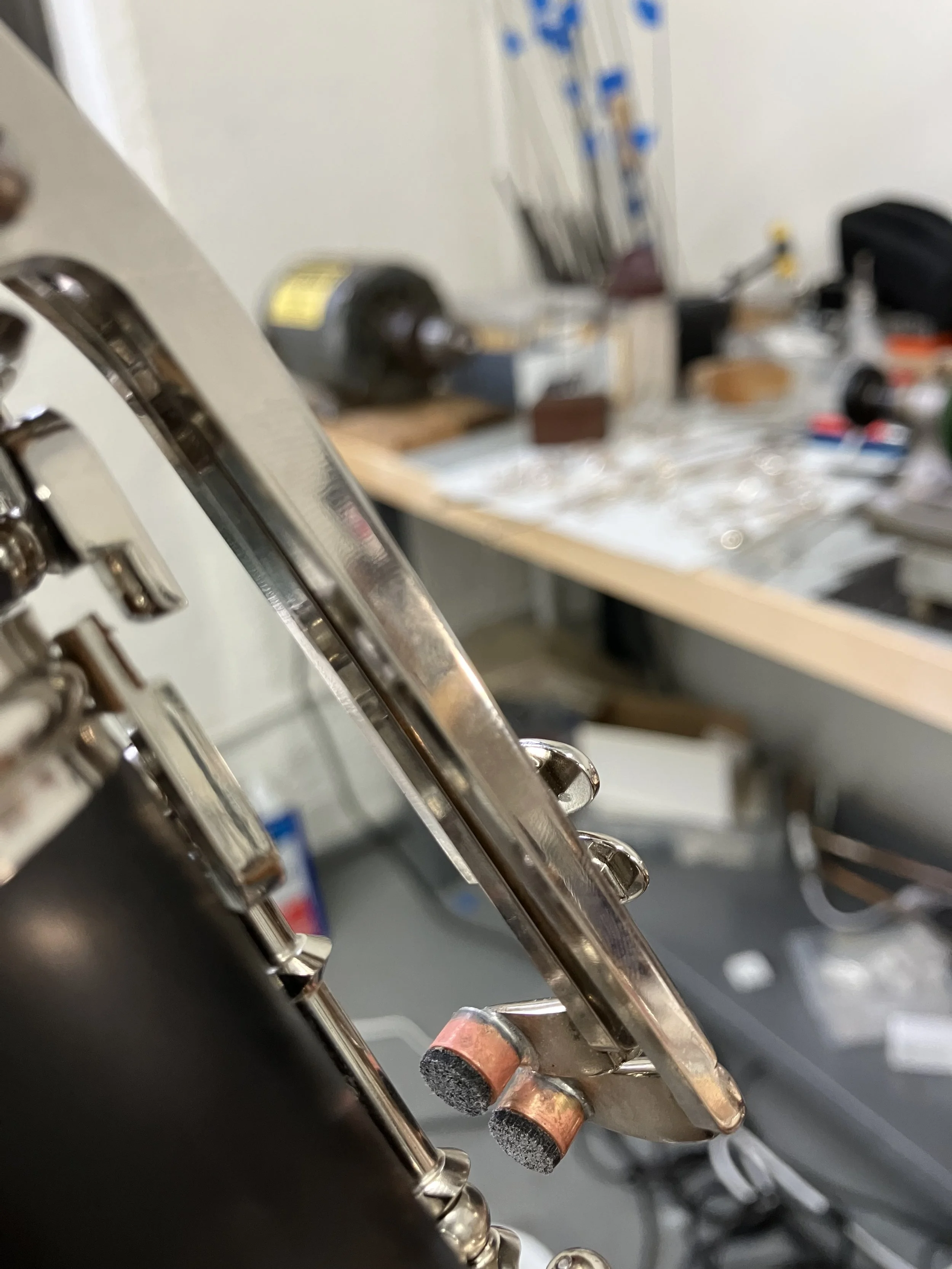
Bass clarinet trill keys modification
This bass clarinet played well, but when you pressed the bottom two side trill keys, the upper trill keys would get lifted open. This is because the bottom two trill keys traveled too far down, by design. Bumper posts can be added to the body or the key can be altered to alleviate this issue. In this case, brass rod stock was soldered onto the keys, slightly protruding over the pointy tips of the trill keys avoid hitting other keys. Q-felts were added under the brass stock to eliminate noise. This is a better solution than simply adding thick pieces of cork because it is longer lasting and the feel will remain unchanged for a long time (cork can squish over time).
Crack repairs (pinning, inserts, CF banding)
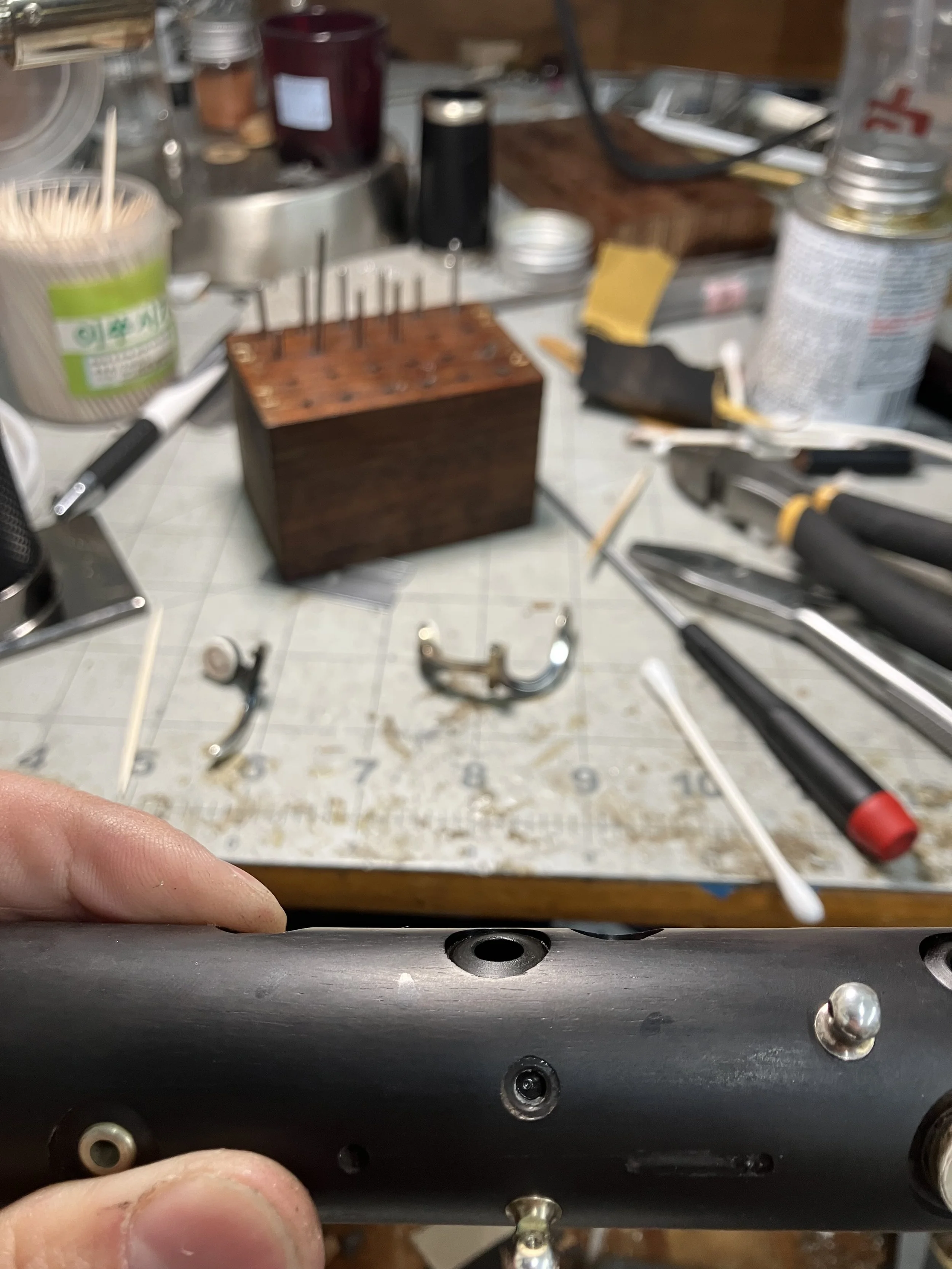
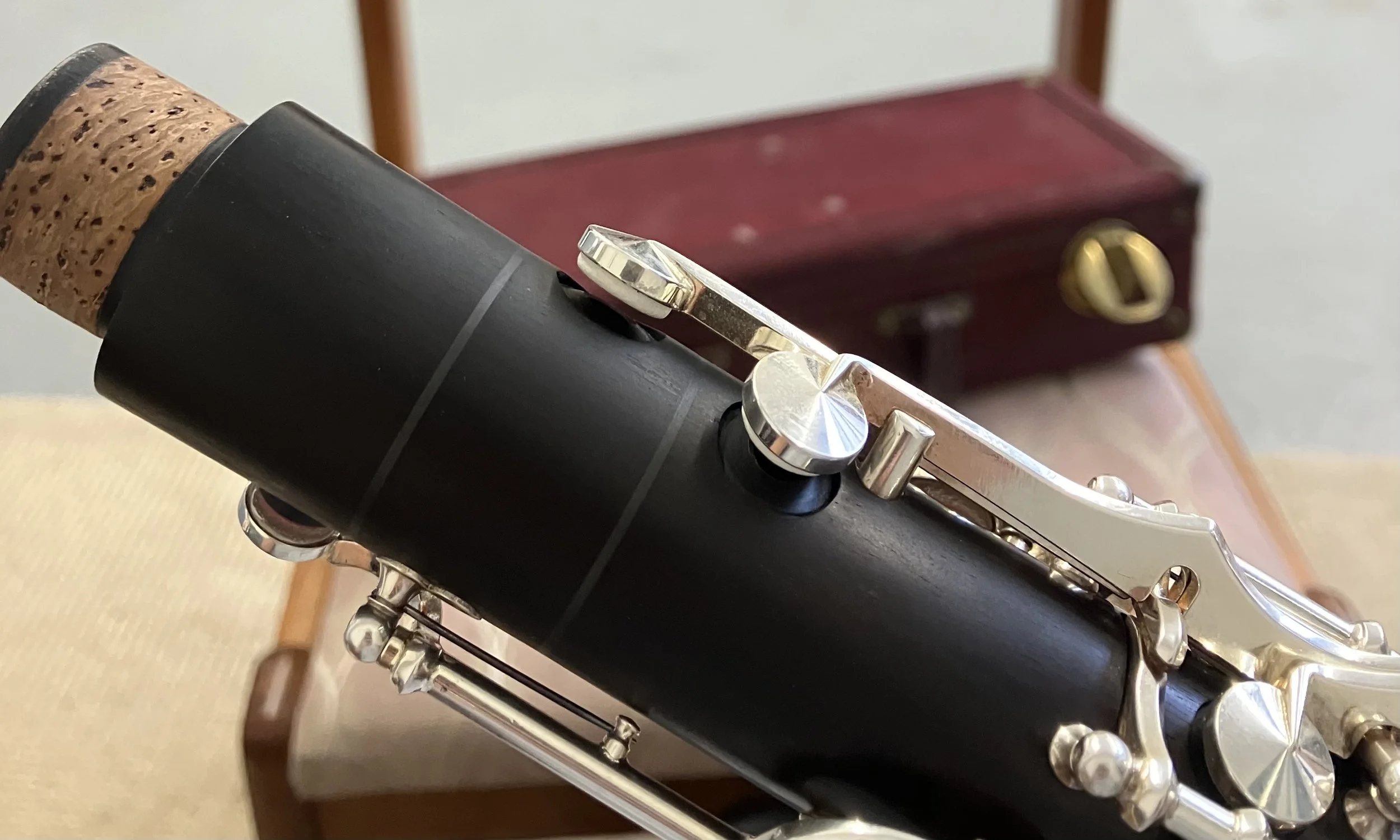
Wood clarinets will very often crack. Most often it is because the player will either blow into a clarinet that is too cold, or too dry (often both). When cracks go through tone holes, the crack will leak air under the pad, so very often the cracked tone holes are milled out and replaced with synthetic (hard rubber, phenolic, ABS, etc) inserts that are glued in with epoxy. The areas of and around the crack are re-enforced by pins (threaded wire or straight carbon-fiber rods) or with carbon fiber bands. Both methods are accepted by the repair community and both methods have their time and place.
In the first photo, the most visible tone hole is a hard rubber insert, and you can see the shiny tear drop-shapes in the wood, which are the holes where the wire pins went in.
In the second photo, the two most visible tone holes are both inserts, and you can see the carbon fiber bands that go all the way around the body.
The point of pins / banding is to prevent the crack to grow further. Please note that cracks can re-open on the surface of the clarinet, but usually if they were repaired well, they will not grow. Cracks occur most often near the top of the upper joint, where it is closest to the source of warm, wet air.